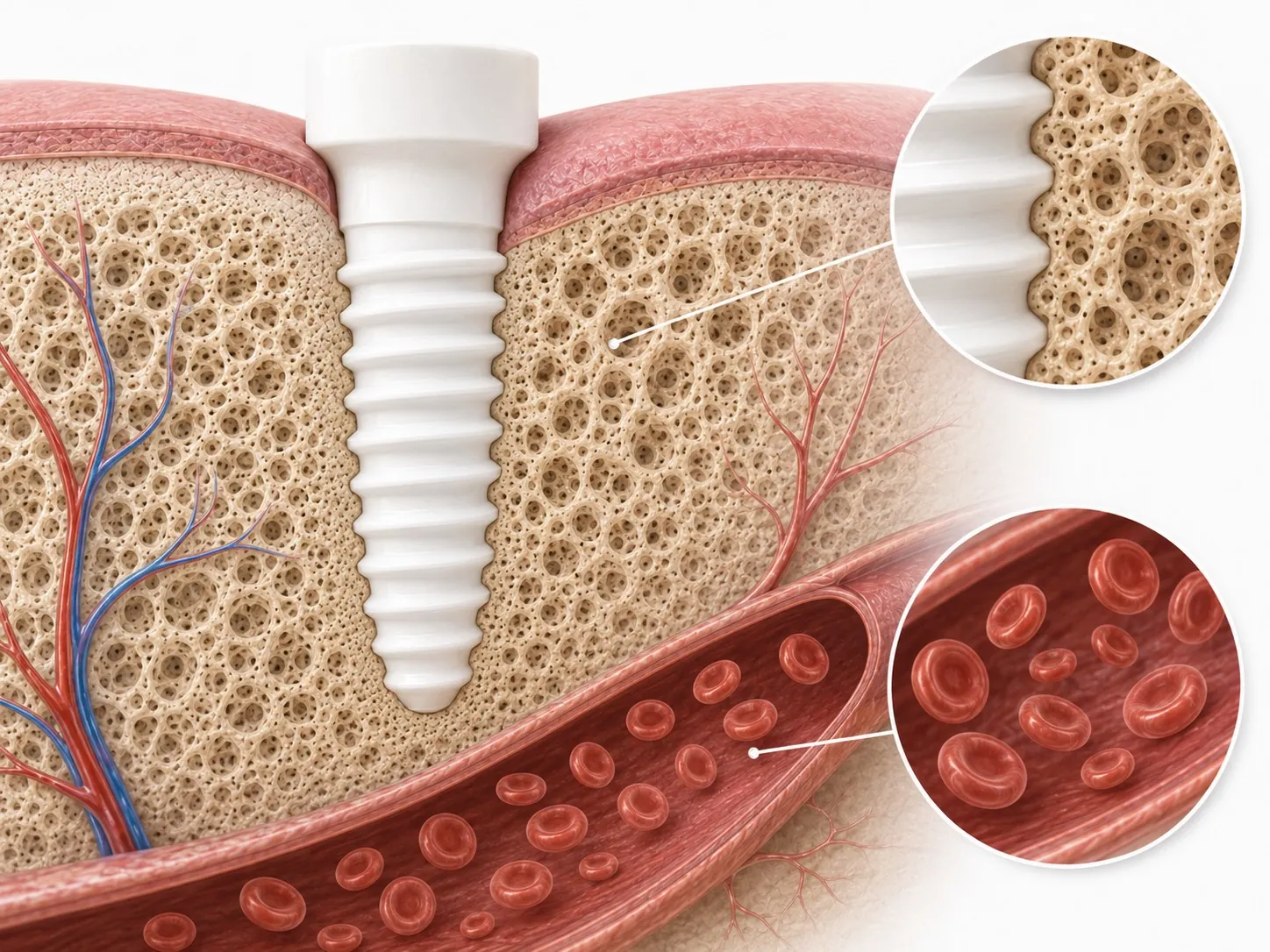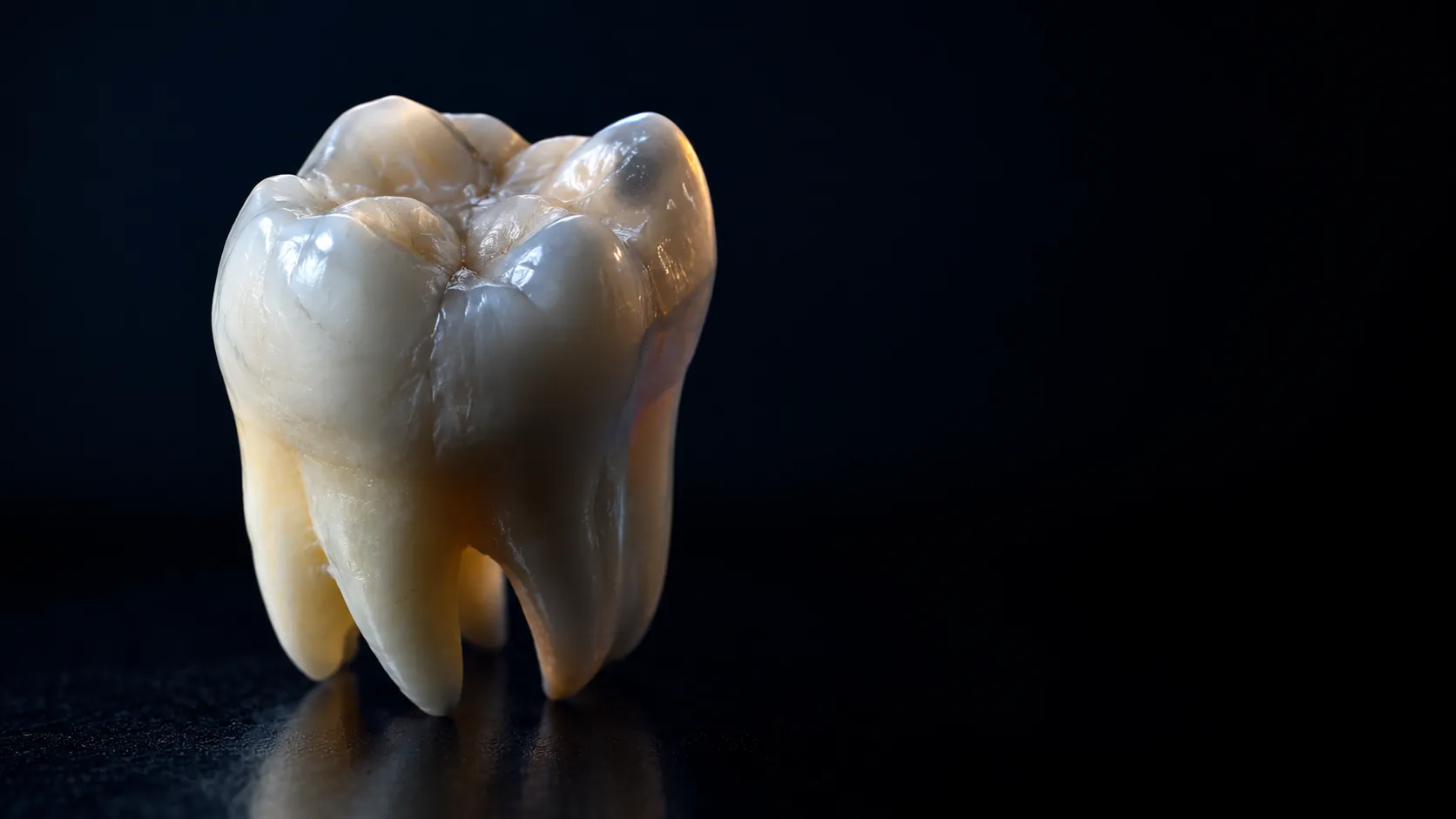
- There is no single holistic rule on root canals. Some biological dentists perform them, some refer them to an endodontist, and each tooth is judged on its own.
- The American Association of Endodontists considers root canal treatment safe and effective, and current evidence does not support claims that root canals cause illness.
- The biological concern is anatomy: side canals and microscopic tubules are hard to disinfect completely, and 3D imaging helps when the picture is unclear.
- The options are keeping the tooth with a conservative restoration, a root canal, or extraction and an implant or bridge, each with real trade-offs.
Do holistic dentists do root canals?
Some do, some refer the treatment to an endodontist (a root canal specialist), and some recommend removing the tooth more often than a conventional dentist would. There is no single holistic or biological rule. What a careful biological dentist adds is a way of deciding: one tooth at a time, with 3D imaging when it helps, and with keeping, treating and replacing the tooth all weighed before anything is done.
So when people ask why holistic dentists do not do root canals, the honest answer is that the premise is only partly true. This guide sets out what mainstream endodontics and holistic or biological dentistry each say about root canals, where they agree and where they differ, and what to ask before you decide. If the field is new to you, start with what a biological dentist is.
Is root canal treatment safe? What mainstream dentistry says
A root canal treats the pulp, the soft tissue of nerves and blood vessels inside a tooth, when it is badly inflamed or infected. The damaged tissue is removed, the canals are cleaned, disinfected and sealed, and the tooth is then restored, often with a crown.
The American Association of Endodontists (AAE) describes root canal treatment as a safe, routine procedure performed millions of times a year, with a success rate often above 90%. Its position is that saving a natural tooth is the preferred option whenever possible. Independent research supports the long term picture: a systematic review that pooled clinical studies found that between 86% and 93% of teeth were still in place 2 to 10 years after root canal treatment, and that a crown placed afterward was the strongest of the factors linked to keeping the tooth.
Where did the fear of root canals come from?
Much of it traces back to the focal infection theory of the early 1900s, which suggested that bacteria trapped in treated teeth could leak out and cause disease elsewhere in the body. According to the AAE's root canal safety fact sheet, the research behind it was criticized as soon as it was published, better designed studies had discredited it by the early 1930s, and in 1951 a review in the Journal of the American Dental Association shifted the standard of practice back to saving teeth with root canal treatment. Mainstream dentistry abandoned the theory long ago. The AAE's position is that there is no valid scientific evidence linking root canal treated teeth to disease elsewhere in the body, and current evidence does not support the idea that root canals cause illness. A trustworthy biological dentist will tell you so plainly.
Why are some biological dentists cautious about root canals?
The caution is mostly about anatomy. A root is not a simple tube. Besides the main canal, many roots have side branches called lateral or accessory canals, narrow bridges between canals called isthmuses, and fine branching near the tip. The dentin around the canals is also threaded with microscopic tubules, and bacteria can work their way into them.
This is not a fringe observation. A 2021 review in Frontiers in Oral Health calls these complexities "a norm rather than an exception" and names anatomy, along with the bacteria themselves, as the two key challenges in clearing infection from a root canal. The AAE also acknowledges that complex canal anatomy can make a tooth hard to clean fully, which is one reason a treated tooth sometimes needs retreatment.
Where the two views part ways is in what follows. The International Academy of Oral Medicine and Toxicology (IAOMT), the professional academy best known for biological dentistry, published a 2026 position paper arguing that accessory canals can hide leftover tissue that is hard to reach and hard to see on a flat x-ray, and that informed consent, advanced imaging and careful case selection are essential. The AAE's view is that modern cleaning, disinfection and sealing reduce the bacterial load and make root canal treatment safe and effective.
Taking root anatomy seriously is a reason to examine a tooth closely. It is not evidence that root canal treatment makes people ill.
How does 3D imaging help evaluate a tooth?
A standard dental x-ray flattens a three dimensional tooth into one image. It does not always show how many roots and canals a tooth has, and it can miss early inflammation at the root tip. Cone beam computed tomography (CBCT) shows the tooth and the bone around it in three dimensions, slice by slice.
The AAE and the American Academy of Oral and Maxillofacial Radiology updated their joint guidance on CBCT in 2025. It recommends a small field of view scan when symptoms and standard x-rays do not add up, to find calcified canals during treatment, and when a previously treated tooth is not settling and the choice is between retreatment, surgery or extraction. It also says CBCT should not be used routinely or for screening, only when a lower dose standard x-ray cannot answer the question. Put simply, 3D imaging earns its place when it can change the decision for that tooth.
What does a biological dentist do instead of a root canal?
Sometimes nothing instead, because for some teeth a root canal is the right call. In general there are three paths, and which ones are open depends on the health of the pulp, how much sound tooth is left, the bone around the root and what matters most to you.
1. Keep the tooth with a conservative restoration
When decay or an injury has irritated the pulp without destroying it, the tooth may not need a root canal at all. Vital pulp therapy aims to keep the pulp alive: the decay is removed completely, the pulp is protected with a biocompatible material such as a calcium silicate cement, and sometimes only the inflamed part of the pulp is taken out. The AAE's 2021 position statement on vital pulp therapy says dentists may now have options other than a root canal for some mature teeth, including some whose pulps were once considered too inflamed to keep, and stresses sealing the tooth with a lasting restoration right away. Bonded, biomimetic restorations follow the same principle of saving as much healthy tooth as possible.
The trade-offs: this only works while the pulp is still alive, it depends on careful case selection, the tooth needs follow up, and the statement's authors call for more long term trials.
2. Root canal treatment
When the pulp is irreversibly damaged, or has died and become infected, and the tooth can still be restored, root canal treatment lets you keep your own tooth. That has real value. The AAE points out that keeping a natural tooth helps maintain your bite, the jawbone around it and normal chewing, and avoids the surgery, time and extra appointments an implant involves. The trade-offs are that back teeth often need a crown afterward, and a treated tooth can become reinfected, sometimes years later, and need retreatment or surgery at the root tip.
You may also read that ozone can replace a root canal. Some biological dentists use ozone as an added disinfectant, but the AAE's view is that it has not been shown to replace the cleaning, shaping and sealing that an infected pulp needs.
3. Extraction and replacement
Some teeth cannot be saved, for example because of a fracture below the gumline, extensive decay or too little bone support. In other cases a patient, after a full discussion, decides not to keep a particular tooth. Once it is removed, the space is usually filled with one of these:
- An implant. A standalone replacement root placed in the jawbone and topped with a crown. Implants are made of titanium or of zirconia, a ceramic that the IAOMT considers the most biocompatible choice. See zirconia implants in Santa Monica and our comparison of zirconia and titanium implants.
- A bridge. A replacement tooth held in place by crowns on the teeth on either side, which means crowning those neighboring teeth.
- A removable partial denture. A nonsurgical, cost effective option.
Extraction has consequences of its own. The AAE notes that removing a tooth often leads to further procedures to restore chewing and keep neighboring teeth from shifting, and that an implant means surgery, time for the bone to integrate it, added cost and more appointments. For someone who has weighed everything and prefers not to keep a particular tooth, those trade-offs can still be worth it. It should be a decision made with full information, not under pressure.
Questions to ask before you decide
- What is the state of the pulp? Inflamed but alive, or dead and infected? That decides whether keeping the tooth without a root canal is possible.
- Can the tooth be restored? How much sound tooth is left, and would it need a filling, an onlay or a crown afterward?
- What does the imaging show? Would a 3D scan change the plan for this tooth, and if so, how?
- Who would do the treatment? If a root canal is recommended, ask who would perform it and how complex anatomy would be handled, or whether an endodontist should see the tooth.
- What happens if I wait? The AAE notes that an untreated infection can worsen into an abscess and that delay can cost you the tooth.
- If the tooth comes out, what replaces it? Ask about the materials, the timeline and the total cost of each option.
- Would you welcome a second opinion? A dentist who is confident in a recommendation should.
Root canal decisions in Santa Monica and Sacramento
Dr. Alireza Panahpour has practiced biological dentistry since 1994. He is an accredited, SMART certified member of the IAOMT and a Certified Instructor of Biomimetic Dentistry, and zirconia has been part of his practice since 2001. If you are weighing a root canal, a consultation at the Santa Monica office or the Sacramento office looks at the specific tooth: your history, an examination and 3D imaging where it adds information. You will hear which options are realistic for that tooth and the reasons for each. You are welcome to request a consultation and bring your questions.
Common questions
Why do holistic dentists not do root canals?
The premise is only partly true. Some holistic and biological dentists perform root canals, some refer them to an endodontist and some recommend extraction more often. Those who are cautious usually point to root anatomy, such as side canals and microscopic tubules that are hard to disinfect completely. The American Association of Endodontists considers root canal treatment safe and effective, and the best choice depends on the individual tooth.
What does a biological dentist do instead of a root canal?
It depends on the tooth. If the pulp is inflamed but still alive, vital pulp therapy and a sealed, conservative restoration may let you keep the tooth without a root canal. If the pulp has died and the tooth can be restored, a root canal may be the right choice. If the tooth cannot be saved, or you decide not to keep it, it can be replaced with an implant, including a metal free zirconia implant, a bridge or a partial denture.
Are root canals safe?
The American Association of Endodontists describes root canal treatment as a safe, routine procedure and says there is no credible scientific evidence that it causes disease elsewhere in the body. The early 1900s focal infection theory behind many of these fears was discredited long ago. Like any procedure, a root canal can occasionally fail and need retreatment.
Is it better to get a root canal or an extraction?
The AAE's view is that saving a natural tooth is preferable whenever possible, because extraction often leads to further procedures such as an implant or a bridge. Not every tooth can be saved, though. The right answer depends on the pulp, how much sound tooth remains, the bone around it and your own priorities, and 3D imaging can help when the picture is unclear.
Can a tooth be saved without a root canal?
Sometimes. When the pulp is irritated but still alive, vital pulp therapy, such as pulp capping or removing only the inflamed part of the pulp, followed right away by a sealed restoration, aims to keep the pulp alive. The AAE supports this for carefully selected mature teeth. Once the pulp has died and become infected, the choice is usually between a root canal and extraction.
Do I need a 3D scan before a root canal?
Not always. The AAE and the American Academy of Oral and Maxillofacial Radiology advise against routine CBCT scans. They recommend a small field of view scan when symptoms and standard x-rays do not agree, to find calcified canals during treatment, or when a previously treated tooth is not settling and the choice is between retreatment, surgery and extraction.
Sources
- American Association of Endodontists: Myths about root canals
- American Association of Endodontists: Root canal safety fact sheet (2026)
- Ng YL, Mann V, Gulabivala K. Tooth survival following non-surgical root canal treatment: a systematic review of the literature. International Endodontic Journal. 2010;43(3):171-189
- Wong J, Manoil D, Näsman P, Belibasakis GN, Neelakantan P. Microbiological aspects of root canal infections and disinfection strategies: an update review on the current knowledge and challenges. Frontiers in Oral Health. 2021;2:672887
- AAE and AAOMR joint position statement: Use of cone beam computed tomography in endodontics, 2025 update. Journal of Endodontics. 2026;52(1):4-13
- American Association of Endodontists: Position statement on vital pulp therapy (2021)
- International Academy of Oral Medicine and Toxicology (biological view): State of the science on root canal treated teeth (2026)
Holistic and biological dentistry since 1994, in Santa Monica and Sacramento. IAOMT accredited and SMART certified. Fourth generation dentist and author of The Good Dentist.
Related: Biological Dentist in Santa Monica · Cavitation Surgery in Santa Monica · Zirconia Implants in Santa Monica
This article is general education, not medical or dental advice. Every mouth and every health history is different; please talk to a licensed professional about your own situation.